The Landmark Checklist Trap: What It Can Keep You From Seeing
A landmark checklist can crowd out the life around famous sights. Learn how to notice local routines respectfully and bring home a more specific sense of place.
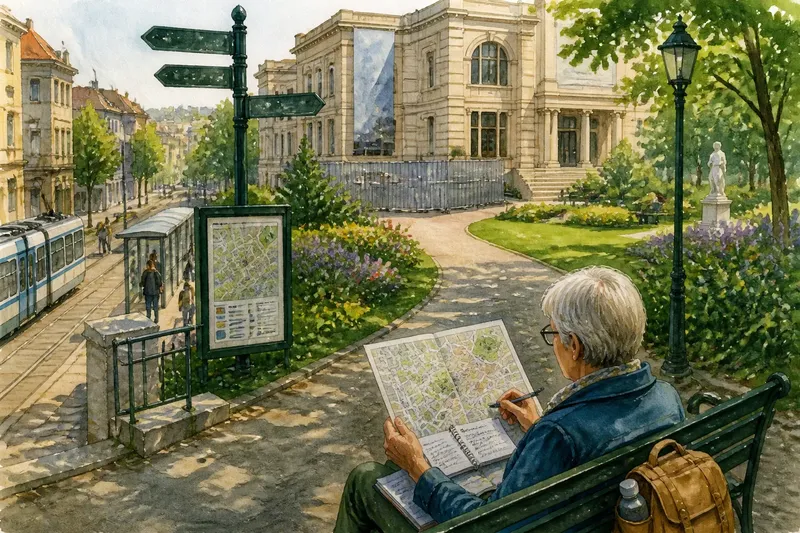
You reach a famous square with your landmark checklist open, but the entrance you planned to use is closed for an event. A nearby information board points to a public arcade, a covered passage locals use to cross the square. That small change can turn a rigid route into a more useful question: how does this place connect to the rest of the neighborhood?
A landmark checklist is useful for choosing sights, but its order can obscure how one place relates to another. Instead of searching for a single detail to collect, use the plan to notice connections: where streets lead, how public spaces meet, and which routes remain comfortable if your original path changes.
Read the connections
Before entering a landmark, check a paper map or a map app for the streets, transit stops, and public spaces around it. Look for practical links rather than hidden attractions: a passage between streets, a bus stop near the exit, a public bench, or a level route back toward your hotel.
This approach makes the visit more than a sequence of destinations. A cathedral may sit beside a market street; a museum courtyard may open onto a public park. Noticing those connections helps you understand the layout without needing to interpret every building or track what individual passersby are doing.
Keep the map handy, but avoid treating every nearby marker as another obligation. A route is useful when it gives you options, including an easy way to pause or leave.
Check access before arrival
For a landmark with stairs, uneven paving, crowds, or limited seating, check the venue’s current access information before setting out. Confirm which entrance is open, whether seating is available, and whether nearby transit has a step-free route if that matters to your plans. Conditions can change, so use the venue or transit operator’s own updates when access affects your decision.
Then choose a visit that suits your energy. You might see the exterior, use an accessible entrance, take a short loop, or spend time in a neighboring public space. None of these options requires you to explain or justify changing the plan.
- Entrance: If the planned entrance is closed or has stairs you want to avoid, then use the confirmed accessible entrance or choose an exterior visit instead.
- Seating: If the site has a place to sit along your intended route, then keep that route; if not, shorten it or plan a pause in a nearby public space.
- Surface: If the map or venue notice shows an uneven section, then choose a smoother alternative route if available, or skip that section.
- Transit: If the return stop has a route that suits your access needs, then use it; if not, check another stop or arrange a different way back.
- Opening information: If the venue confirms the area you want to see is open, then keep it on the plan; if not, choose another nearby place or return another day.
- Weather cover: If the route offers a covered public space for a pause, then keep it as an option; if not, plan a shorter outdoor visit or choose an indoor alternative.
Keep notes about place
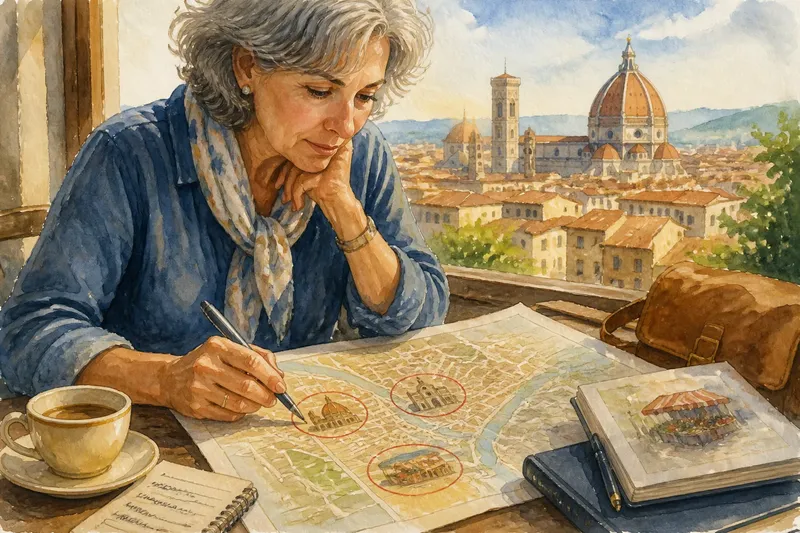
A short note can record how a landmark fits into its surroundings. Write down a street name, a route connection, a sign that helped you orient yourself, or the location of a useful public space. Stick to what you can observe; a specific note is more helpful than a broad claim about what residents always do.
A map annotation or a quick sketch can serve the same purpose. If you take a photograph, frame the architecture or public layout rather than a stranger at close range. Avoid recording private conversations, and give people space.
Say your printed map shows a museum, a tram stop, and a public garden close together, while the museum’s usual entrance is marked closed on its current notice. You check the posted access details, choose the open entrance on the garden side, and mark the tram stop as your return option. On arrival, the garden path is level and has a public bench, so you visit the museum exterior, pause there, and return to the tram without crossing the closed entrance area. The useful result is a route shaped by confirmed access and visible connections, not a forced attempt to complete the original plan.
Questions about landmark routes?
Should I skip famous sights?
No. Keep the landmarks that matter to you, then check how each fits with nearby streets and transit. If a site no longer suits your plans, an exterior view or a later visit can be a reasonable alternative.
How can I find an easier route?
Check the venue’s access page and a current map for entrances, surfaces, seating, and nearby transit. If those sources leave an important access question unanswered, contact the venue or transit operator before setting out.
What should I write in a travel note?
Record a place name, a route connection, or a practical feature you may want to remember. Keep observations grounded in what you saw, and leave out assumptions about people’s habits or private lives.
What if my plans change?
Use the map to choose a nearby public space, a shorter route, or a simple return to your starting point. Changing direction is easier when the checklist guides your options rather than setting a completion target.
Use the list flexibly
A landmark checklist can help you remember opening arrangements, choose a route, and decide which sights matter most. Add useful connections beside the destinations: a suitable entrance, a nearby transit stop, or a place where you can pause. Then revise the plan if access information, weather, or your energy changes.
What is not worth the effort is hunting for a supposedly authentic corner or treating every nearby map symbol as a required stop. Use reliable local information for practical decisions, and let an ordinary route remain ordinary if that is what suits the day.
Keep the landmark checklist available for the next trip, but note the connection that made this visit workable: the entrance, street, or transit link you would choose again. That small piece of practical knowledge can make a return visit easier to plan.